Genome's Internal War: Telomeres Evolve Under Pressure
In the realm of evolutionary biology, the "Red Queen Hypothesis" describes a relentless race where organisms must constantly adapt and evolve simply to maintain their current standing against external threats. While scientists typically apply this concept to the struggle between predators and prey or hosts and pathogens, recent research from the University of Pennsylvania suggests this battle is also raging within our own genetic code.
The Hidden Conflict Within the Genome
Not every segment of DNA operates for the collective good of the organism. Some sequences, known as selfish genetic elements or "jumping genes," prioritize their own replication. These mobile elements can shift positions, potentially disrupting vital genes or destabilizing the genome. To counter these internal threats, cells have developed sophisticated molecular safeguards designed to identify, suppress, and neutralize these intrusive sequences.
This ongoing internal friction creates a biological paradox. Many of the most fundamental processes required for life rely on proteins that are forced to change at an incredibly fast pace. This rapid evolution is necessary to counter-act the shifting tactics of selfish DNA, ensuring that essential cellular functions remain intact.
Telomeres: The Guardians of Chromosomal Integrity
A team of researchers led by biologist Mia Levine investigated this phenomenon by studying Drosophila melanogaster, the common fruit fly. Their study focused specifically on telomeres—the protective structures found at the ends of chromosomes. These caps are vital for maintaining genomic health, as they prevent chromosomes from fraying or fusing together.
When telomeres fail, the results are catastrophic:
- Widespread genetic instability
- Significant declines in fertility
- Premature cellular or organismal death
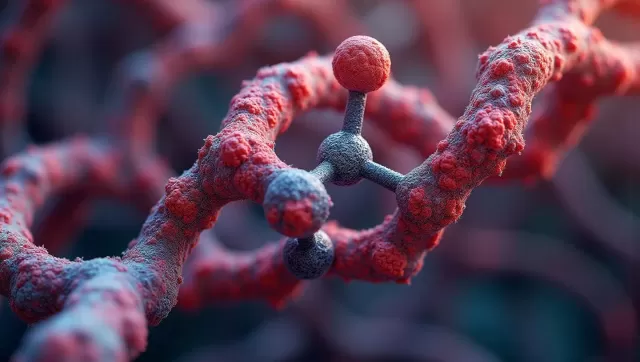
To maintain these barriers, a complex of six specialized proteins works in unison to bind and protect the chromosomal tips.
Rapid Adaptation in Essential Protein Complexes
The researchers discovered that while the protective function of the telomere complex remains constant, the proteins themselves are in a state of flux. Two specific proteins, HipHop and its partner HOAP, show significantly higher rates of evolution compared to their peers. Despite this rapid change, both remain indispensable for the fly's survival.
To test how these proteins adapt, the Penn team utilized advanced gene-editing technology. They replaced the HipHop protein in D. melanogaster with a version from a closely related species, D. yakuba. The result was a total failure of the cellular defense system. The flies could not survive, as their chromosomes fused together, proving that the proteins must be precisely tuned to their specific genetic environment.
The Power of Minor Molecular Shifts
The study further pinpointed the exact nature of this evolutionary tuning. By reverting just six specific amino acids in the D. yakuba HipHop protein back to the D. melanogaster configuration, the researchers restored the protein's ability to function. They also found that introducing the D. yakuba version of the partner protein, HOAP, allowed the two to work together effectively once more.
This discovery highlights a process known as compensatory evolution. As one protein changes to suppress a new genetic threat, its partner protein is forced to adapt alongside it to maintain the integrity of the complex.
Broad Implications for Genomic Research
The findings suggest that this "Red Queen" dynamic is not unique to fruit flies. Similar evolutionary patterns have been observed in primates, indicating that human genomes may also be shaped by this constant internal warfare. Understanding how these proteins coevolve allows scientists to better grasp how life preserves ancient, vital functions while simultaneously adapting to an ever-changing landscape of internal genetic threats. This research opens new doors for studying genomic stability and the complex mechanisms that keep our DNA functioning correctly over millions of years.