Henna's Modern Renaissance: Art, Identity, and Global Appeal
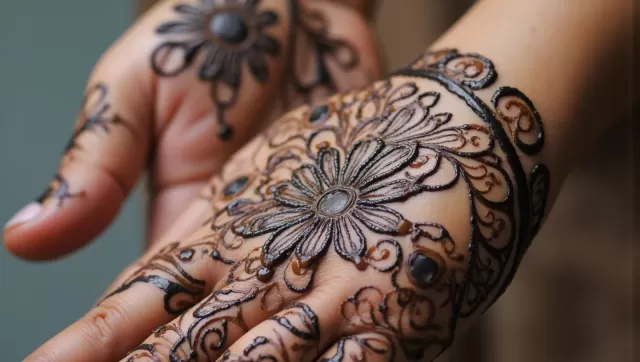
The vibrant art of henna is undergoing a profound transformation, moving from intimate family gatherings to the bustling British high street and even gracing international red carpets. What was once a tradition primarily associated with weddings and special occasions within specific communities is now being embraced as a legitimate art form, a powerful tool for cultural expression, and a modern beauty statement.
Across the UK, particularly in the lead-up to Eid celebrations, temporary henna stalls have become a common sight. Women of all ages gather, their hands adorned with intricate designs created by skilled artists for a modest fee. This widespread accessibility signifies a significant shift in how henna is perceived and practiced.
The art's journey has extended far beyond local communities. Celebrities are increasingly showcasing henna-inspired designs, demonstrating its appeal across diverse cultural landscapes. This rising profile is fueled by a growing interest, especially among younger generations, who are leveraging henna for artistic expression, political statements, and affirmations of their cultural identity. Online trends reflect this surge in popularity, with searches for henna experiencing a dramatic increase. Social media platforms are awash with tutorials and innovative uses, from delicate faux freckles to elaborate floral patterns, illustrating henna's adaptability to contemporary beauty standards.
However, for many individuals, the relationship with henna hasn't always been straightforward. Personal experiences of being questioned or even ridiculed for sporting henna designs in the past have, for some, led to a period of hesitation. Yet, a palpable sense of pride is emerging, with many young people of color now actively seeking out henna adornment as a way to connect with and celebrate their heritage.
This reclamation of henna from the shadows of cultural appropriation and erasure is at the heart of initiatives like HuqThat, a London-based collective dedicated to elevating henna to the status of fine art. Since its inception, the collective has collaborated with notable artists and brands, fostering a new appreciation for the craft. As one collective member notes, there's a noticeable cultural shift, with individuals proudly embracing traditions that may have once been a source of self-consciousness due to societal pressures or racism.
Derived from the Lawsonia inermis shrub, henna boasts an ancient lineage, with evidence of its use dating back over 5,000 years across Africa, South Asia, and the Middle East. Its applications have historically been diverse, ranging from therapeutic cooling properties to beautification and ceremonial blessings. Beyond its aesthetic appeal, henna has always served as a powerful conduit for community bonding and self-expression, a way for people to visibly celebrate their heritage.
The collective emphasizes that henna is fundamentally an art form of the people, originating from the very communities that cultivate the plant. They advocate for its recognition on par with other established art forms like calligraphy, highlighting its rich history and cultural significance.
In their artistic endeavors, the collective strives to create inclusive spaces, extending the tradition of henna to LGBTQ+ individuals who may have previously felt excluded. They understand the intimacy of the process and aim to provide a safe and welcoming environment for all.
Mirroring the inherent versatility of henna itself, the collective tailors their designs to individual preferences, drawing inspiration from diverse regional styles and personal connections. Clients are encouraged to bring their own inspirations, whether it be jewelry, poetry, or fabric patterns, to create unique and deeply personal artworks. This approach moves beyond generic online designs, offering a truly bespoke experience.
For individuals like Aminata Mboup, a designer and sculptor, henna serves as a profound link to her Senegalese heritage. She utilizes jagua, a natural blue-black dye, to create designs that echo the darkened fingertips of her grandmother, symbolizing a transition into womanhood and embodying grace and elegance. By incorporating henna into her daily life, Mboup actively performs her Black identity, seeing the adornment as a constant, visible declaration of her origins and sense of self. She finds the application process to be a meditative ritual, offering a moment of pause and connection to ancestral traditions in a fast-paced world.
Pavan Ahluwalia-Dhanjal, founder of the world's first dedicated henna bar, acknowledges the multifaceted nature of henna's appeal. She observes that people engage with it for cultural, political, or purely aesthetic reasons, and she respects each motivation. Her journey began with experimentation at family events, facing initial skepticism about the viability of henna as a recognized craft. However, her venture has since defied predictions, attracting a diverse clientele far beyond her own community. Her goal is to make henna as accessible and commonplace as lipstick or nail polish, a beauty staple for everyone.
While henna's increased visibility is largely positive, it also brings challenges, particularly concerning the delicate balance between appreciation and appropriation. Ahluwalia-Dhanjal advocates for a broader understanding of henna, emphasizing that its year-round availability and broad appeal demonstrate its acceptance across numerous cultures, dispelling the notion that it is solely for specific festivals or communities.
Ultimately, henna's enduring power lies in its ability to connect individuals across time and geography. For many, it serves as a powerful reminder of inner strength and virtue, a personal mark of identity and heritage that is both cherished and owned.