Iowa Researchers Purify Single Photons for Quantum Tech
Researchers at the University of Iowa have unveiled an innovative approach to enhance the purity of single photons, a breakthrough with significant implications for the advancement of light-based quantum technologies, including quantum computing and secure communication. This novel technique addresses fundamental challenges in generating reliable streams of single light particles, paving the way for more robust optical quantum systems.
The team pinpointed two primary hurdles that have historically hampered the consistent production of single photons.
Laser Scatter: Unwanted Light Interference
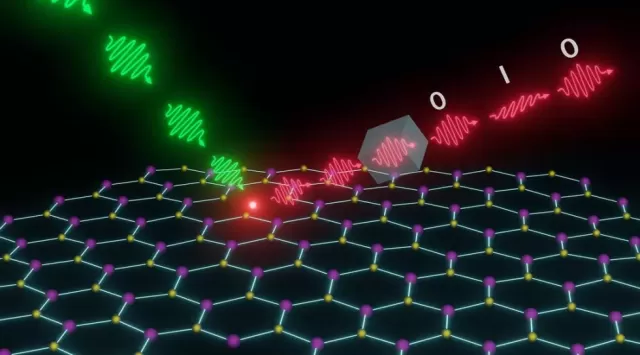
One significant obstacle is "laser scatter." When a laser is used to stimulate an atom to emit a photon, this process can inadvertently generate additional, extraneous photons. These unwanted particles function as interference within an optical circuit, diminishing efficiency much like stray electrical currents disrupt traditional electronic systems.
Multi-Photon Emission: Disrupting Quantum Order
A second challenge stems from how atoms interact with laser light. In certain instances, an atom can release more than one photon simultaneously. This multi-photon emission disrupts the precise sequencing essential for quantum operations, as the excess photons interfere with the intended one-by-one flow of single particles.
Harnessing Laser Noise for Photon Purification
In their recent work, graduate student Matthew Nelson discovered an unforeseen link between these two issues. He observed that when an atom emits multiple photons, the resulting wavelength spectrum and waveform closely mirror those of the original laser light.
This remarkable similarity, as explained by the researchers, allows for a precise adjustment of the laser and the unwanted photon emissions to effectively cancel each other out. Essentially, the laser scatter that typically poses a problem can be repurposed to suppress these unwanted multi-photon events.
Assistant Professor Ravitej Uppu, the study's corresponding author, stated, "We have demonstrated that stray laser scatter, usually considered a detriment, can be harnessed to eliminate unwanted, multi-photon emission. This theoretical advancement has the potential to transform a persistent issue into a potent new instrument for propelling quantum technologies forward."
The Critical Role of Single Photons in Quantum Computing
Photonic computing, which utilizes light instead of electricity for computations, promises systems that are both faster and more efficient. Unlike conventional computers that rely on bits representing binary states, quantum computers employ qubits, often embodied by subatomic particles like photons.
Many forward-thinking technology firms recognize the pivotal role of photonic platforms in the future of quantum computing. The realization of this vision hinges on the availability of a stable and meticulously controlled stream of single photons.
An organized photon stream not only facilitates easier management and scalability but also bolsters security. The researchers draw an analogy to a carefully managed cafeteria line where students are served individually, preventing the chaos of a crowd. Similarly, a precise single-photon sequence minimizes the risk of data interception or eavesdropping.
Precision Control for Enhanced Photon Purity
Uppu highlighted that the core of this new methodology lies in the precise control of the laser beam. "By precisely dictating how the laser beam interacts with an atom – its angle of incidence, beam shape, and other parameters – we can engineer it to cancel out all the additional photons the atom might emit," he explained. "This leaves us with a remarkably pure photon stream."
The theoretical findings suggest that two significant obstacles to developing faster photonic circuitry can be addressed concurrently. If these results are substantiated through experimental validation, this technique could significantly accelerate the development of sophisticated quantum computers and more secure communication networks. The research team intends to explore these possibilities in upcoming experiments.
The study, titled "Noise-assisted purification of a single-photon source," has been published in the journal Optica Quantum. Funding for this research was provided by the Office of the Under Secretary of Defense for Research and Engineering, part of the U.S. Department of Defense. Additional support was instrumental in launching the project through a seed grant from the University of Iowa Office of the Vice President for Research via the P3 program.