Milky Way Core Mapped: Unveiling Cosmic Origins
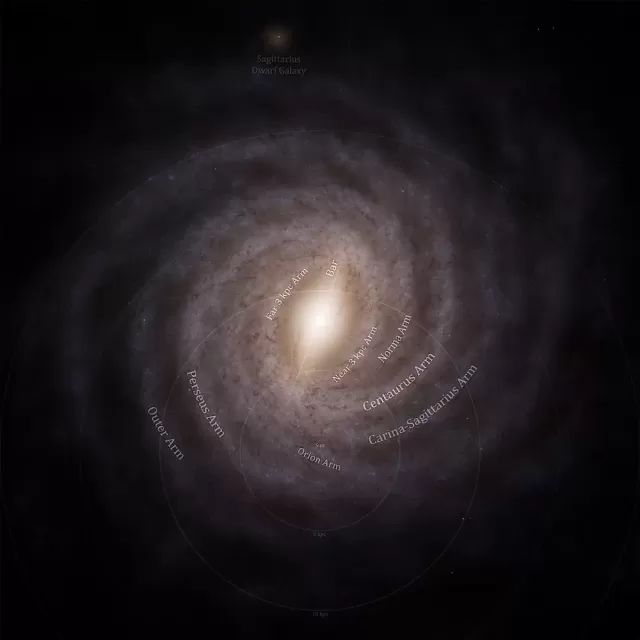
In a groundbreaking achievement, scientists have captured an unprecedentedly detailed image of the Milky Way's core, offering a stunning glimpse into the very heart of our galactic home. This vast panorama, the largest ever produced by the Atacama Large Millimeter/submillimeter Array (Alma) radio telescope in Chile, is more than just a beautiful spectacle; it's a vital key to understanding our cosmic origins.
A Window into Galactic Birthplaces
The conditions found at the Milky Way's center – characterized by extreme temperatures, immense pressures, and dynamic turbulence – closely mirror those present in galaxies during the early universe. It was during this formative era that the majority of stars we observe today were born. While distant galaxies are too far to resolve individual star and planet formation, the Alma survey allows us to study these processes in our own galactic backyard.
Prior to this comprehensive image, astronomers were limited to viewing isolated fragments of the galactic center, akin to having scattered snapshots of city streets without a cohesive map. This new survey, the Alma CMZ Exploration Survey, brings together the missing connections, revealing how gas clouds, star-forming regions, and other galactic components interact.
Unexpected Discoveries in the Galactic Core
The detailed view has unveiled surprising features, including long, thin filaments of matter actively flowing to form new stars and planets. These structures provide direct evidence of the dynamic processes driving cosmic evolution. Beyond its scientific significance, the image possesses a profound aesthetic quality, where the visual beauty itself reflects the underlying physics of the universe.
Future Exploration with Advanced Telescopes
Researchers are eager to build upon this discovery. Plans are in motion to utilize instruments like the James Webb Space Telescope and the forthcoming Extremely Large Telescope to further investigate these celestial phenomena. By combining observations across different wavelengths, scientists can create composite images where distinct colors represent specific physical properties. This allows for the pinpointing of cause-and-effect relationships, such as identifying how collisions between gas clouds can trigger the birth of young stars. While the quest for observation time on powerful telescopes like Webb is highly competitive, the potential for groundbreaking insights remains immense.