Nvidia Earth-2: AI Weather Forecasting Gets Major Upgrade
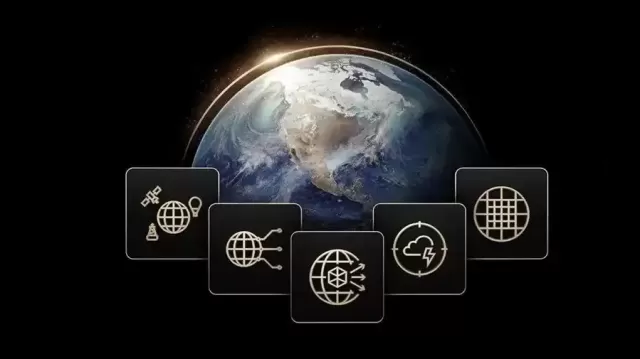
NvidiaNvidia has launched its advanced Earth-2 suite of AI-powered weather forecasting models, aiming to significantly enhance accuracy and speed in predicting atmospheric phenomena. This release comes at a crucial time, as recent winter storm forecasts across the U.S. have demonstrated considerable variability.
Earth-2 Medium Range: A New Benchmark in Forecasting
A standout in the new lineup is the Earth-2 Medium Range model. Nvidia asserts that this model outperforms Google DeepMind's GenCast across more than 70 distinct variables. GenCast, itself a leap forward released in December 2024, offered improved accuracy over existing models for forecasts extending up to 15 days. The Earth-2 Medium Range model leverages Nvidia's innovative Atlas architecture, with further technical details to be disclosed.
A Shift Towards Simplicity and Scalability
According to Mike Pritchard, director of climate simulation at Nvidia, the development philosophy behind Earth-2 represents a move towards simpler, scalable transformer architectures. This approach contrasts with the previous trend of developing highly specialized AI models for specific tasks, signaling a broader strategic direction for the company in artificial intelligence for weather modeling.
Expanding the Earth-2 Ecosystem
Beyond the Medium Range model, Nvidia's Earth-2 suite encompasses two other key components:
- Nowcasting Model: This tool focuses on ultra-short-term predictions, ranging from zero to six hours into the future. Its primary aim is to assist meteorologists in anticipating the immediate impacts of severe weather events, such as storms. A key advantage of Nowcasting is its ability to be adapted globally, as it's trained on worldwide geostationary satellite observations rather than region-specific physics models. This universality makes it invaluable for governments of all sizes, enabling them to better understand and prepare for severe weather's territorial effects.
- Global Data Assimilation Model: This model synthesizes data from diverse sources, including weather stations and weather balloons, to create real-time snapshots of atmospheric conditions across thousands of global locations. These snapshots serve as the crucial starting point for subsequent weather model predictions. Traditionally, generating these snapshots has been computationally intensive, consuming approximately half of the supercomputing resources dedicated to weather forecasting. Nvidia's model dramatically reduces this burden, performing the task in minutes on GPUs, a stark contrast to the hours required on supercomputers.
Democratizing Access to Advanced Forecasting
These new additions complement Nvidia's existing Earth-2 offerings: CorrDiff, which generates high-resolution forecasts rapidly from coarser data, and FourCastNet 3, designed for modeling individual weather variables like temperature, wind, and humidity.
Pritchard highlighted that the Earth-2 suite aims to broaden access to sophisticated weather forecasting technologies, which have historically been accessible primarily to wealthier nations and large corporations due to the high cost of supercomputing time. These tools provide foundational capabilities for a wide range of users, including national meteorological services, financial institutions, and energy companies, empowering them to build and refine their own forecasting models.
Already, practical applications are emerging. Meteorologists in Israel and Taiwan are utilizing Earth-2 CorrDiff, while The Weather Company and Total Energies are in the evaluation phase for the Nowcasting model. Nvidia emphasizes that for certain entities, such as nations, the ability to maintain sovereign control over weather data and forecasting is paramount, positioning weather as a critical national security issue.