UCLA Chemists Redefine Double Bonds and Molecular Structure
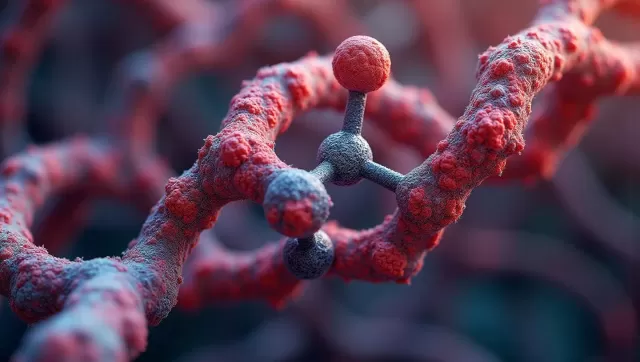
Textbooks often present chemical bonding rules as unbreakable laws, but recent work from the University of California, Los Angeles suggests these boundaries are far more porous than previously thought. Following their 2024 success in disproving Bredt's rule—a century-old edict prohibiting double bonds at certain structural positions—chemist Neil Garg and his team have pushed the envelope further. They have successfully synthesized cubene and quadricyclene, two cage-like molecules containing geometrically distorted double bonds that defy conventional wisdom.
Challenging the Geometry of Double Bonds
In standard organic chemistry, atoms sharing a double bond (alkenes) typically align in a flat, two-dimensional plane. This arrangement is considered the most stable configuration. However, the UCLA research team found that cubene and quadricyclene do not adhere to this flatness. Published in Nature Chemistry, their data reveals that these molecules force their double bonds into twisted, three-dimensional forms.
This deviation is not just a structural oddity; it fundamentally alters the nature of the bond itself. While a standard alkene has a bond order of 2, representing shared electron pairs, the strain within these compact cage structures results in a bond order closer to 1.5. To describe this extreme non-planar geometry, the researchers coined the term "hyperpyramidalized."
The Process of Synthesis and Capture
Creating these molecules requires overcoming significant instability. Because cubene and quadricyclene are highly reactive, they cannot be isolated and stored like typical chemical compounds. Instead, the team utilized a trapping method to verify their existence.
The synthesis process involved several key steps:
Precursor Creation: Researchers developed stable compounds containing silyl groups (silicon-centered clusters) and leaving groups.
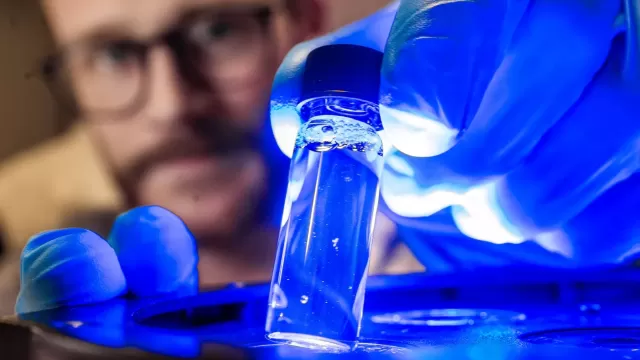
Fluoride Treatment: Introducing fluoride salts to the precursors triggered the formation of the target molecules within the reaction vessel.
Immediate Reaction: Due to their instability, the molecules were instantly captured by other reactants present in the mix, resulting in complex chemical products that served as proof of the transient molecules' existence.
Computational modeling, led by UCLA chemist Ken Houk, corroborated the experimental results, confirming that these molecules exist briefly in a state of high strain before reacting.
Opening New Doors for Pharmaceutical Design
The move away from flat molecular structures is particularly relevant to the pharmaceutical industry. For decades, drug discovery focused largely on flat, two-dimensional molecules. However, biological targets in the human body are three-dimensional, prompting a shift toward more complex molecular architectures.
According to the research team, the ability to synthesize rigid, 3D structures like cubene opens new pathways for medicine. As the industry exhausts the potential of simpler structures, these "rule-breaking" molecules offer fresh building blocks for next-generation therapeutics.
A Philosophy of Breaking Rules
The project underscores a shift in how chemistry is taught and practiced. The findings suggest that many established chemical rules should be viewed as guidelines rather than immutable facts. By challenging these constraints, scientists can expand the toolkit available for synthetic chemistry.
Neil Garg's laboratory emphasizes a three-pronged approach to research:
- Challenging fundamental scientific knowledge.
- Pursuing chemistry with practical societal applications.
- Training researchers who will drive innovation in academia and industry.
Supported by the National Institutes of Health, this research included contributions from postdoctoral scholars and graduate students, marking a collaborative effort to redefine the limits of molecular structure.