Venezuela Blockade Spurs Oil Price Jitters

Global crude markets pushed higher during Wednesday's trading session, driven by renewed anxieties regarding supply availability. The upward momentum follows a directive from US President Donald Trump, who has mandated a comprehensive blockade on sanctioned maritime vessels operating within Venezuelan waters.
By late morning in the UAE, Brent Crude—the international benchmark governing two-thirds of global oil trade—had climbed 1.37 percent to reach $59.73 per barrel. Simultaneously, West Texas Intermediate (WTI), the primary gauge for US crude, advanced 1.45 percent to trade at $56.07 per barrel.
Escalating Geopolitical Tensions
The rally serves as a rebound for WTI, which had previously dipped to levels not seen since early 2021 earlier in the week. The preceding sell-off was largely attributed to growing optimism surrounding peace negotiations intended to resolve the conflict in Ukraine, raising the possibility of Russian oil re-entering the global supply chain in significant volumes.
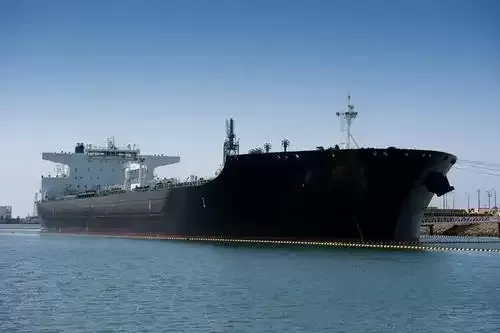
However, the focus has shifted back to South America. On Tuesday, President Trump issued orders to blockade sanctioned tankers entering or departing Venezuela. This geopolitical maneuver places immediate pressure on the oil flow leaving the nation. The policy escalation comes on the heels of a significant naval operation last week, where US forces intercepted and seized a massive tanker off the Venezuelan coast. Officials stated that the vessel, which had been under sanctions for several years, was utilized for the illicit transport of crude between Venezuela and Iran.
Market Impact and Supply Dynamics
Market analysts suggest that while the geopolitical noise is loud, the fundamental support for prices may be limited. Vandana Hari, chief executive of Vanda Insights, noted that the supply risk from Caracas provides only "marginal support" due to the country's diminished export footprint.
Conversely, several factors are currently exerting downward pressure on energy prices:
- Diplomatic Progress: Constructive rhetoric regarding a potential peace deal in Ukraine suggests an easing of sanctions on Russian energy.
- Weather Patterns: Forecasts predicting a milder-than-average winter in the Northern Hemisphere have tempered expectations for heating fuel demand.
- Oversupply Fears: Concerns persist that global markets may face a glut of inventory in the near term.
Heavy Crude and Production Analysis
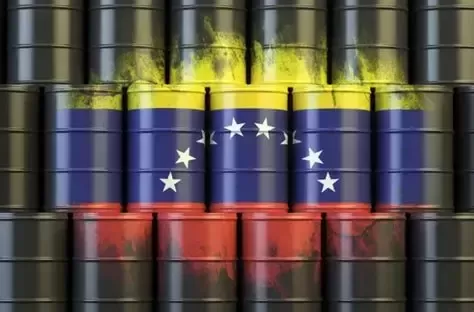
While Venezuela's total contribution to global trade is relatively minor—representing approximately 1 percent of flows—the specific composition of its export is critical. According to data from Rystad Energy, over 67 percent of the nation's output consists of heavy crude, a specific grade that is difficult to replace.
Current production statistics indicate that Venezuela is generating roughly 1.1 million barrels per day (bpd), with the majority of these barrels destined for markets in China and India. Rystad Energy warned that benchmark prices could face significant volatility if military tensions between Washington and Caracas continue to mount, particularly with the US administration signalling potential incursions to pressure the government of Nicolas Maduro.
Opec+ Strategy and Future Outlook
Beyond geopolitical flashpoints, structural market changes are also influencing price action. Volatility has been a staple of the market this year, exacerbated by tariff policies and the strategic decisions of the Opec+ alliance.
Traders are currently pricing in the expectation of increased supply entering the market in the coming year. The producers' group recently agreed to unwind some of its production cuts, adding 137,000 bpd to the market for December. However, in a move to stabilize expectations amid fluctuating demand, Opec+ has opted to pause any further production hikes for the first quarter of next year.