Visible Light Creates Conductive Plastic Electrodes
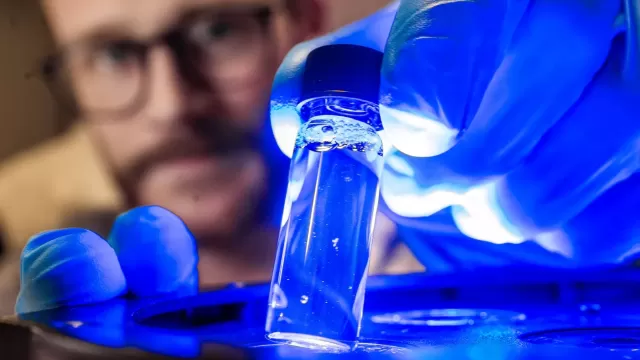
A groundbreaking development from Swedish researchers is set to transform how we create electronics. Scientists from Linköping and Lund universities have pioneered a new method that uses visible light to produce electrodes from conductive plastics. This innovative technique completely eliminates the need for harsh chemicals, toxic solvents, and damaging UV radiation, paving the way for simpler, safer, and more versatile electronic applications. Xenofon Strakosas, an assistant professor at the Laboratory of Organic Electronics (LOE), highlights this as a major advancement, simplifying the creation of electronics without requiring expensive or complex machinery.
The Science of Conductive Plastics
The research centers on conjugated polymers, often called conductive plastics. These remarkable materials merge the electrical conductivity of metals and semiconductors with the flexibility, light weight, and affordability of plastics. This unique combination makes them ideal for next-generation technologies in fields ranging from renewable energy to advanced medical devices.
Traditionally, creating these polymers involves a process called polymerization, where individual molecules, or monomers, are linked together into long chains. This process has historically relied on strong and often toxic chemicals, posing safety risks and limiting the scalability of production, especially for applications intended for use in or on the human body.
Harnessing Light for a Cleaner Process
The new technique developed by the research team, in collaboration with colleagues in New Jersey, bypasses these chemical hurdles. They engineered special water-soluble monomers that activate and link together when exposed to nothing more than ordinary visible light. This light-activated polymerization is a game-changer. It allows for the precise fabrication of electrodes without any hazardous inputs or secondary processing steps.
The method is elegantly simple. A solution containing the custom monomers is applied to a surface. A controlled light source, such as a laser, is then used to draw a pattern on the solution. Only the areas illuminated by the light undergo polymerization, forming a solid, conductive electrode. The remaining unpolymerized solution can be simply washed away, leaving behind a perfectly patterned, functional electronic component.
Expanding the Horizons for Electronics
This chemical-free method opens up an unprecedented range of possibilities because it works on an array of different surfaces. Electrodes can now be formed directly on glass, flexible textiles, and even human skin. This versatility is a key advantage for creating new types of wearable technology and medical sensors.
Tobias Abrahamsson, a researcher at LOE and the study's lead author, emphasizes the material's exceptional properties. The resulting electrodes can conduct both electrons and ions, allowing them to interface seamlessly with biological systems. This, combined with the inherently gentle and biocompatible chemistry of the process, makes the material perfectly suited for medical applications where tissue tolerance is paramount.
Proven Success and Future Potential
To validate their approach, the team successfully photo-patterned electrodes directly onto the skin of anesthetized mice for electroencephalography (EEG) tests. The results were remarkable, showing a significant improvement in the ability to record low-frequency brain signals when compared to standard metal EEG electrodes.
Looking forward, this technology holds immense promise. The ability to form sensors on various materials could lead to smart garments that monitor health metrics. Furthermore, the absence of dangerous solvents makes this method highly suitable for the large-scale, cost-effective manufacturing of complex organic electronic circuits, heralding a new era of safer and more accessible technology.